For Prof. Tran Duc Vien, the 70-year journey of Vietnam National University of Agriculture (VNUA) had always been deeply rooted in the fields, the lives of farmers, and an enduring aspiration to serve the nation.
The story of VNUA began in the humble thatched-roof classrooms and bamboo-walled lecture halls of Quynh Do, Thanh Tri. On October 12, 1956, the University of Agriculture and Forestry, the predecessor of today’s VNUA, was established amid the hardships of rebuilding northern Vietnam.
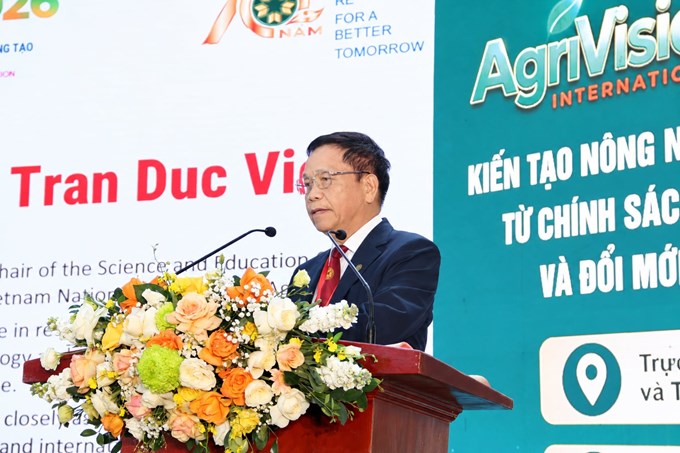
Prof. Tran Duc Vien, former VNUA’s President, encourages students to nurture their dreams, dare to take on challenges, and pursue agriculture with integrity and a strong sense of responsibility. Photo: Mai Dan.
Seven decades later, reflecting on the University’s journey, Prof. Tran Duc Vien, former Rector of the University of Agriculture I, former President of the Vietnam National University of Agriculture (VNUA), and Chairman of its Scientific and Training Council, spoke often of the enduring bond between teachers, students, and farmers.
For him, this bond was a continuous thread running through the university’s history—from the years of war to the eras of reform and international integration, and from field trips to research projects serving agricultural production.
Lecture Halls Through the Decades
In his recollections, Prof. Vien speaks of classes held during evacuation in Cao Bang, and of teachers and students who studied and harvested rice under bombardment along the frontline in Nghe An in 1967–1968. In 1971, around 2,000 faculty members and students joined efforts to prevent the breach of the Cong Thon dyke. Whenever the country was in need, they left their lecture halls to lend a helping hand.
According to Prof. Tran Duc Vien, 2,567 students put aside their books and took up arms to defend the nation. Their spirit of sacrifice is commemorated by the monument “The Frontline Calls, We Stand Ready,” honoring those who devoted their youth in response to the call of the Fatherland.
After national reunification, thousands of students and lecturers once again set out to survey soils and develop agricultural land-use plans in the Mekong Delta, the Central Highlands, and other ecological regions. Rural communities became not only places to apply classroom knowledge but also places where teachers and students continued to learn from real life.
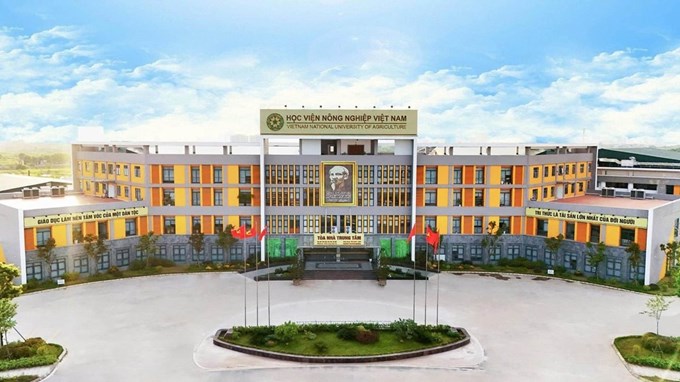
Over the past 70 years, VNUA has trained more than 150,000 engineers and bachelor’s degree holders, over 15,000 master’s graduates, and nearly 800 doctoral graduates. Photo: NTCC.
He recalled the spirit captured in the Vietnamese saying, “Wherever we go, we are remembered; wherever we stay, we are cherished,” reflecting the deep bonds forged through these journeys. By bringing their knowledge to local communities, scientists also brought back questions from the fields and practical experience that books alone could not fully convey.
This enduring connections were reflected in the contributions of generations of scientists. Prof. Luong Dinh Cua, Prof. Bui Huy Dap, and other pioneering scholars left a lasting legacy in research, education, and agricultural production. Their names continued to be honored through libraries, lecture halls, plazas, and commemorative structures across the university.
During his nearly 10 years at the helm, Prof. Tran Duc Vien oversaw a series of decisions that brought significant changes to the University. In 2014, the transfer of the university’s governing authority to the Ministry of Agriculture and Rural Development, together with the restoration of the name Vietnam National University of Agriculture, created greater opportunities to align education and research with the practical needs of the agricultural sector.
In 2015, the university gained full autonomy. According to Prof. Vien, governance reforms enabled the institution to take greater initiative in mobilizing resources, investing in infrastructure, and developing its workforce. The new facilities were the result of years of persistent preparation, including a detailed master plan that took seven years to develop.
Developing the university’s workforce was a particular priority, with a strong focus on young lecturers. Nearly 200 staff members were sent to Ho Chi Minh City to study English for six months, laying the groundwork for applying for scholarships and pursuing further study abroad. The university also encouraged international publications and promoted the adoption of advanced research methods and knowledge.
While remaining closely connected to agricultural production, the university also opened its doors to the world. According to Prof. Tran Duc Vien, sending lecturers to prestigious universities, facilitating access to international scholarships, and encouraging scientific publications all helped strengthen the university’s research capacity. Monographs by Prof. Vien and his colleagues were published by prestigious academic publishers associated with Kyoto University in Japan and the University of California, Berkeley, in the United States, while their research also appeared in Springer publications. Meanwhile, the CT16 hybrid rice variety was adopted in Cuba’s agricultural fields. Vietnamese scientific achievements were thus making their mark beyond the country’s borders.
Science Growing Alongside Farmers
Throughout his more than 45-year scientific career, Prof. Tran Duc Vien had attached special significance to the time he had spent conducting research alongside local communities. He recalled a field study conducted with the Dan Lai people in the core zone of Pu Mat National Park in Nghe An Province, when local authorities considered relocating the community out of concern that their activities were degrading the forest.
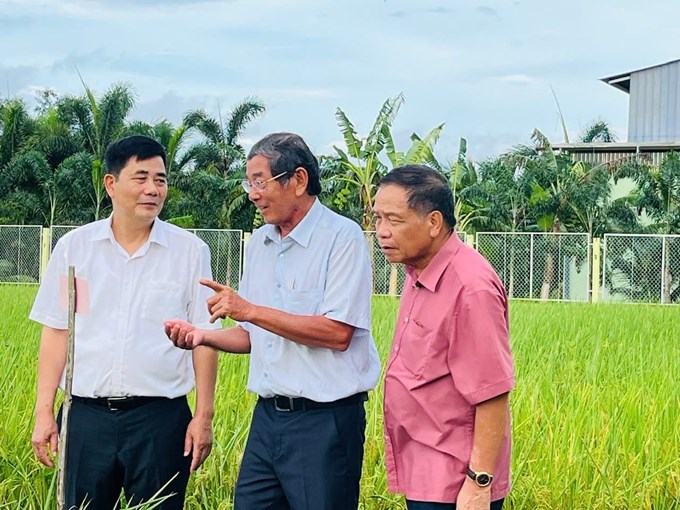
Prof. Tran Duc Vien conducting field research in Soc Trang in 2024 with former Minister of Agriculture and Rural Development Cao Duc Phat and engineer Ho Quang Cua. Photo: NVCC.
He and his colleagues spent months studying the local people’s livelihoods and farming practices. Their research showed that, when population density was still low, these practices did not harm the forest, contrary to the initial assessment.
The team recommended entrusting local communities with the management and monitoring of the forest, while introducing improved farming techniques. The experience reinforced his belief that natural resource conservation had to go hand in hand with sustainable livelihoods and respect for local culture and indigenous knowledge.
“Farmers are our greatest teachers,” he often reminded his students. Farmers possessed a wealth of knowledge accumulated over many growing seasons. To help them effectively, scientists had to first listen to them and understand the challenges they faced in practice.
The close connection between research and agricultural production was reflected in the development of hybrid rice varieties such as VL20 and TH3-3, HT-branded hybrid tomatoes, aeroponic technology, and biological bedding technology for livestock farming. Each innovation put into practice offers a solution to a real-world need.
He recalled a landmark achievement in 2007, when the rights to TH3-3, a two-line hybrid rice variety developed by Labor Hero Nguyen Thi Tram, were transferred for more than VND 10 billion. For him, the adoption of scientific innovations by farmers and businesses was the most tangible recognition of researchers’ contributions.
He, therefore, advocated using improvements in livelihoods and added value as key measures of research success. Research ideas needed to “germinate” from real-world challenges, whether disease outbreaks, soil degradation, post-harvest losses, or evolving market quality requirements. Scientists needed to work alongside farmers to test, refine, and adapt technical and technological solutions directly in production settings.
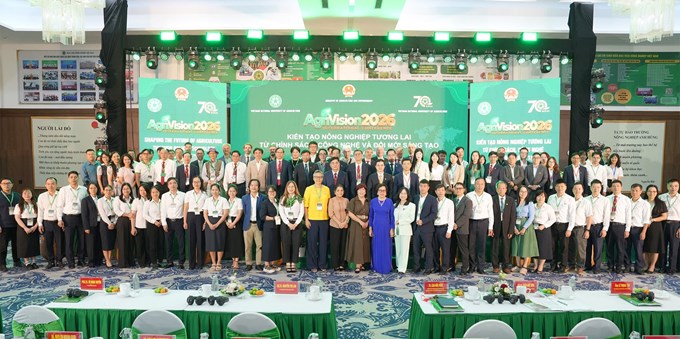
Delegates pose for a group photo at AgriVision 2026, an international conference hosted by VNUA on October 8, bringing together knowledge and partnerships to shape the future of agriculture. Photo: Mai Dan.
In its next phase of development, the university would also have to help farmers master technology, manage production, and access markets through digital technologies of the Fourth Industrial Revolution. Knowledge transfer needed to empower users to make informed choices and decisions for themselves.
This also had implications for students. According to Prof. Tran Duc Vien, technical knowledge might quickly become outdated, but scientific thinking, the ability to learn independently, and a sense of responsibility would serve students throughout their lives. Professional expertise, therefore, had to be complemented by knowledge of digital technologies, storage and preservation, processing, economics, and foreign languages.
To mark the university’s 70th anniversary, he offered the younger generation a simple but powerful message: “Never do anything half-heartedly or settle for mediocrity.” He urged students to nurture their dreams, dare to take on challenges, and pursue agriculture with integrity and a strong sense of responsibility.
The thatched-roof classrooms belonged to history, but one question remained as relevant as ever when graduates stepped into the fields: ‘How can their knowledge make a difference in farmers’ lives?’ The next generation would write its own answers through each growing season, every research achievement, and the meaningful contributions it made to society.
Over the past 70 years, VNUA had trained more than 150,000 engineers and bachelor’s degree holders, over 15,000 master’s graduates, and nearly 800 doctoral graduates. Its alumni had gone on to work in government agencies, research institutes, universities, businesses, and agricultural production communities across the country.