Vietnam National University of Agriculture (VNUA) signed several important agreements in China, expanding cooperation in education, research, and sustainable rural development.
In the context of increasingly wide and deep international integration, expanding collaboration in education, science and technology, and innovation has become an inevitable requirement for higher education institutions. From April 12 to 15, 2026, a delegation from VNUA, led by Prof. Dr. Nguyen Thi Lan, Secretary of the Party Committee and President of the university, paid a working visit to China. During the trip, the delegation attended the Vietnam–China Forum on Higher Education Cooperation, Science and Technology, and Innovation, while also carrying out a number of important cooperation signing activities with leading partners.
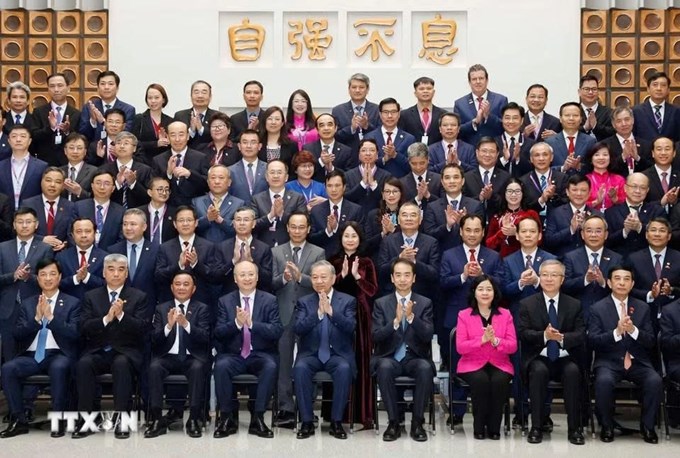
Led by Prof. Dr. Nguyen Thi Lan, Secretary of the Party Committee and President of the university, the delegation of VNUA paid a working visit to China, attended the Vietnam–China Forum on Higher Education Cooperation, Science and Technology, and Innovation, and had the honor of being received and having a meeting with General Secretary and State President To Lam, together with other senior leaders. Photo: Vietnam News Agency.
Expanding Cooperation Networks and Updating Development Trends
By participating in the Forum, VNUA’s delegation actively engaged in discussions and established connections with Chinese universities, research institutes, and partners. The discussions focused on emerging trends in cooperation, including training high-quality human resources, promoting scientific research, fostering innovation, advancing digital transformation, and supporting sustainable development.
Through various activities at the Forum, VNUA not only gained updated insights into new directions for higher education development in the region, but also reaffirmed its capacity, position, and strategic vision for the next stage of growth. This was also an important opportunity for VNUA to expand its international cooperation network through partnerships and agreements with many potential collaborators.
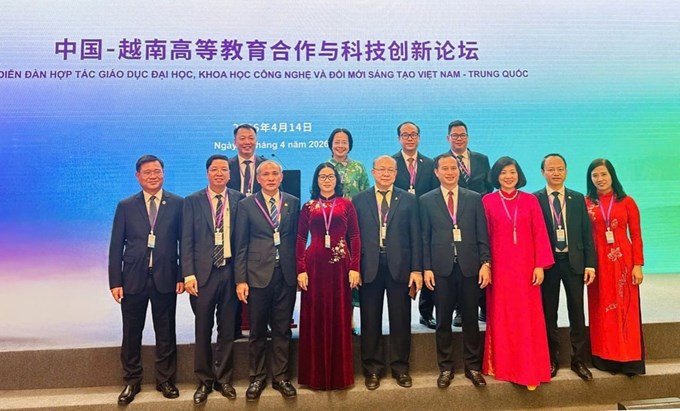
VNUA attends the Vietnam–China Forum on Higher Education Cooperation, Science and Technology, and Innovation, while also carrying out a number of important cooperation signing activities with leading partners. Photo: VNUA.
Notably, within the framework of the program, the delegation had the opportunity to be received and meet with General Secretary and State President To Lam, together with other senior leaders. The event not only demonstrated the attention of the Party and State leadership to international educational cooperation, but also created motivation and confidence for educational institutions to proactively integrate globally and enhance the quality of training and research.
Signing of an MOU with Capital Normal University
One of the important milestones of the working visit was the signing ceremony of a Memorandum of Understanding (MOU) between VNUA and Capital Normal University, which took place on April 14, 2026, in Beijing.
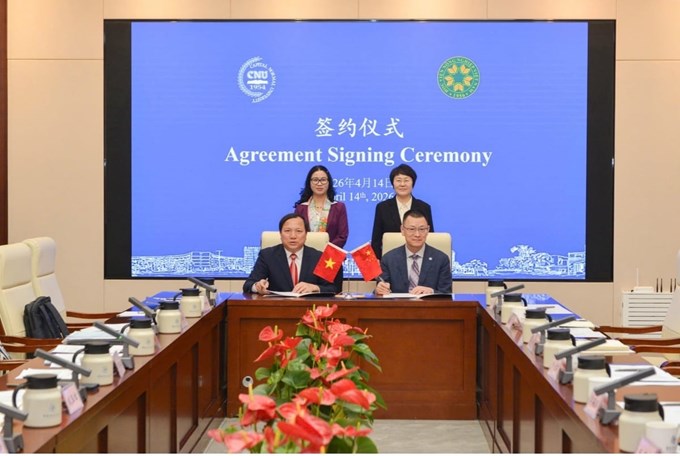
The signing ceremony of the Memorandum of Understanding (MOU) between VNUA and Capital Normal University took place on April 14, 2026, in Beijing. Photo: VNUA.
The areas of cooperation between the two universities focus on a number of practical fields. First, they included the development of academic programs in agriculture and related disciplines, with the aim of improving the quality of human resources to meet practical demands. In addition, both parties would promote exchanges of students, lecturers, and staff, creating opportunities to access an international academic environment and enhance professional capacity as well as research skills.
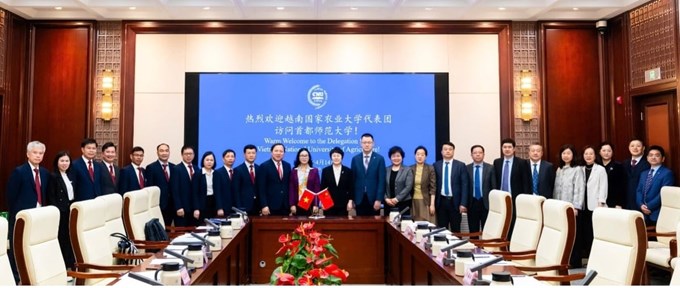
The signing ceremony of the Memorandum of Understanding (MOU) between VNUA and Capital Normal University took place on April 14, 2026, in Beijing. Photo: VNUA.
The two sides also agreed to implement joint scientific research projects, making use of each university’s strengths to generate valuable scientific outcomes. In particular, the cooperation placed emphasis on strengthening the linkage between language training, especially Chinese, and specialized fields such as agriculture, biotechnology, environmental studies, and tourism. This was considered an appropriate direction in the context of growing demand for multidisciplinary and multi-skilled human resources.
Both parties recognized strong potential for cooperation in interdisciplinary areas such as biotechnology, high-tech agriculture, and language training integrated with professional disciplines. The signing of the MOU was regarded as an important foundation for the two universities to further develop practical cooperative programs in the near future.
Promoting Rural Development Cooperation with CIDGA
In addition, during the working visit, VNUA signed a Memorandum of Agreement (MOA) with the College of International Development and Global Agriculture (CIDGA), an affiliated unit of China Agricultural University (CAU).
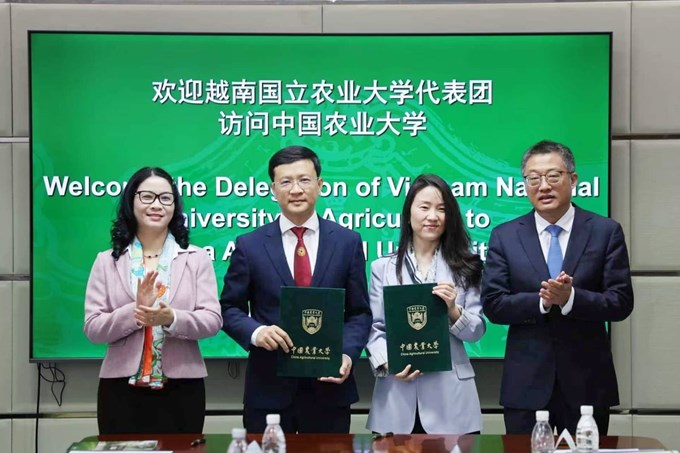
Prof. Dr. Nguyen Thi Lan witnesses the signing of a Memorandum of Agreement (MOA) between VNUA and the College of International Development and Global Agriculture (CIDGA), an affiliated unit of China Agricultural University (CAU). Photo: VNUA.
The cooperation framework between the two sides had been designed in a comprehensive manner, including the development of both short-term and long-term training and capacity-building programs; the promotion of exchanges of students, scholars, and research staff; and the joint implementation of scientific research projects.
Notably, the focus of cooperation was placed on agricultural policy and rural development—issues of significant importance to both countries in their development processes. The two sides also aimed to study and implement initiatives related to agricultural restructuring and rural revitalization, in line with the need to transform growth models and promote sustainable development.
In addition, the organization of scientific conferences, academic forums, and joint publications was identified as one of the key areas of cooperation, contributing to the enhancement of research quality and the dissemination of knowledge.
CIDGA was recognized as a strong partner in the fields of international development research, rural transformation, and poverty reduction. These areas aligned closely with the research orientation of VNUA in its new development phase, creating a favorable foundation for effective and sustainable cooperation programs.
Toward Practical and Long-Term Cooperation
Alongside the signing activities, the delegation from VNUA also held working sessions with the leadership of China Agricultural University to discuss the overall direction of cooperation in the coming period.
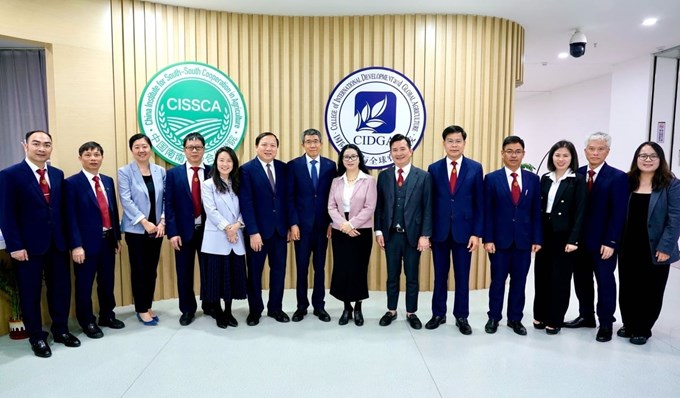
Prof. Dr. Nguyen Thi Lan witnesses the signing of a Memorandum of Agreement (MOA) between VNUA and the College of International Development and Global Agriculture (CIDGA), an affiliated unit of China Agricultural University (CAU). Photo: VNUA.
Through the discussions, the Chinese partners were recognized as having strong capacities in education, research, and technology transfer. At the same time, the parties were found to share many similarities in their development orientations, particularly in the fields of agriculture, environment, and rural development.
On that basis, the parties agreed to promote cooperation in a practical, long-term manner with tangible outcomes. Cooperation should not be limited to academic exchanges, but should be closely linked to research and application in order to generate practical values that contribute to socio-economic development.
Priority areas identified included green agriculture, digital transformation, rural development, and innovation. These were all strategically important fields in the context of global challenges such as climate change, food security, and the demand for sustainable development.
Affirming VNUA’s Position and Enhancing International Standing
It could be affirmed that the working visit to China by VNUA successfully fulfilled all of its objectives. Beyond participating in an important international forum, the delegation also established and strengthened numerous strategic partnerships with reputable counterparts.
The cooperation agreements signed during the visit would serve as an important foundation for the University to implement international collaboration programs in the coming years. Through these initiatives, VNUA would continue to improve the quality of education, strengthen its scientific research capacity, and promote technology transfer.
At a time when Vietnam’s agriculture and environmental sectors were facing a strong demand for transformation, expanding international cooperation would not only help provide access to advanced knowledge, but also contribute to developing solutions suited to domestic practical conditions.
The achievements of this working visit further affirmed the position and international vision of VNUA, while demonstrating the proactive and dynamic role of a leading higher education institution in fostering connections, promoting integration, and contributing to the overall development of Vietnam’s agricultural sector in the new era.