On the morning of October 10, 2026 in Hanoi, Tran Thanh Man, Politburo Member and Chairman of the National Assembly, attended and delivered keynote remarks at the ceremony marking the 70th anniversary of Vietnam National University of Agriculture (VNUA) (October 12, 1956–October 12, 2026) and celebrating VNUA’s receipt of the First-Class Labor Order. To mark the occasion, To Lam, General Secretary of the Communist Party of Vietnam and President of the State; Le Minh Hung, Prime Minister; and Tran Cam Tu, Permanent Member of the Party Central Committee’s Secretariat, sent congratulatory flower arrangements.
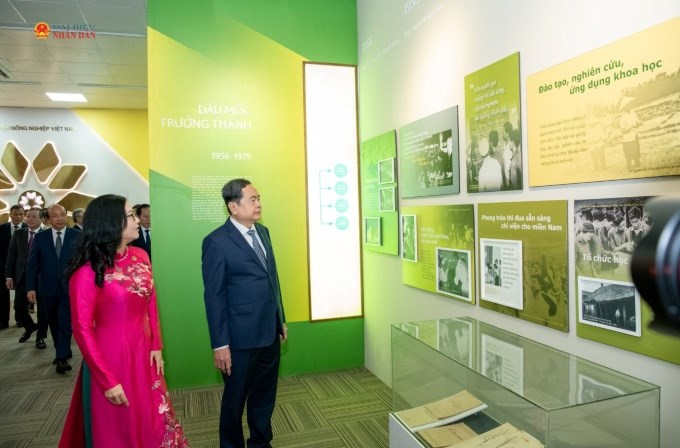
National Assembly Chairman Tran Thanh Man visits VNUA’s traditional exhibition room.
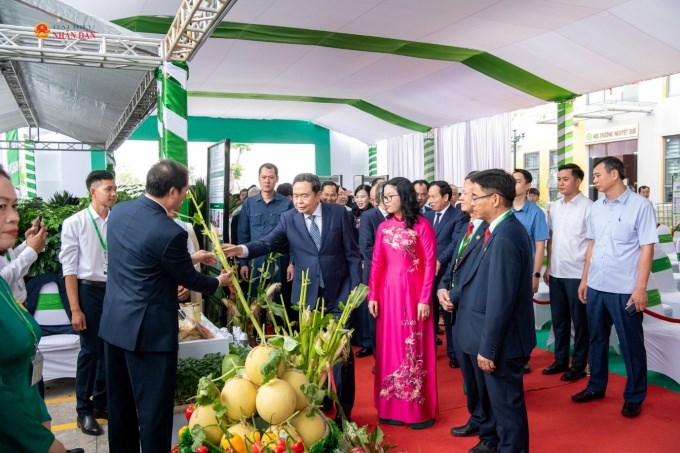
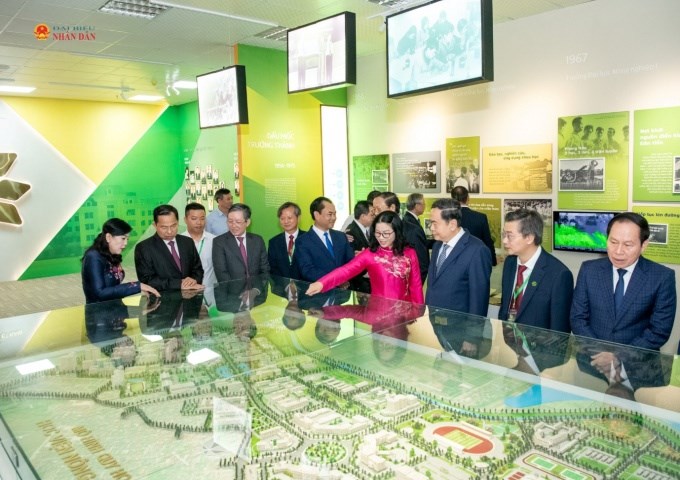
National Assembly Chairman Tran Thanh Man visits VNUA’s traditional exhibition room.
Also attending the anniversary ceremony were Tran Quoc Vuong, former Politburo Member and former Permanent Member of the Party Central Committee’s Secretariat, and the following members of the Party Central Committee: Le Tien Chau, Deputy Prime Minister; Le Quang Manh, Secretary-General of the National Assembly and Chairman of the National Assembly Office; Phan Chi Hieu, Chairman of the National Assembly’s Committee on Legal and Judicial Affairs; Nguyen Thanh Hai, Chairwoman of the National Assembly’s Committee on Science, Technology and Environment; and Trinh Viet Hung, Minister of Agriculture and Environment, among others.
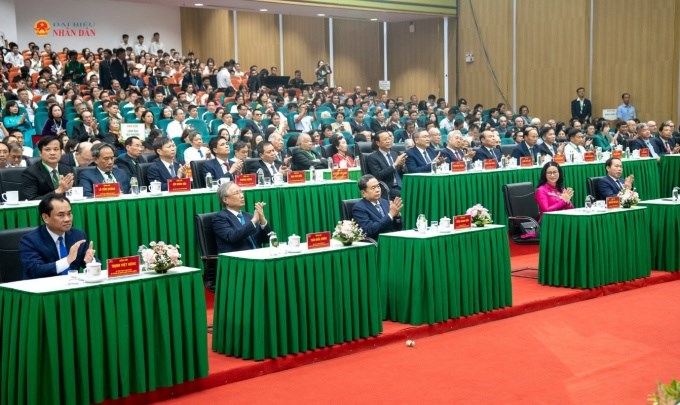
National Assembly Chairman Tran Thanh Man and delegates attend the anniversary ceremony.
It Must Serve as a Hub Connecting Knowledge and Technology with Agricultural Production in Practice
On behalf of the Party and State leadership, National Assembly Chairman Tran Thanh Man presented the First-Class Labor Order to VNUA and delivered remarks at the anniversary ceremony. He expressed his sincere recognition and high appreciation for the tremendous contributions made by generations of teachers and scientists who had devoted their lives to education and scientific research. He also warmly commended the university for its achievements over the past 70 years.
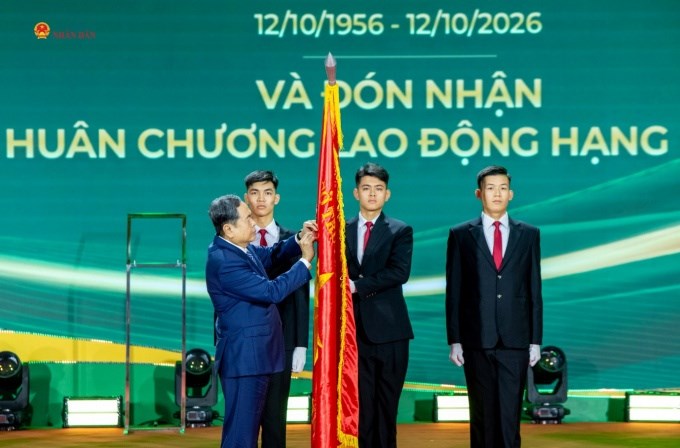
National Assembly Chairman Tran Thanh Man presents the First-Class Labor Order to VNUA.
The National Assembly Chairman emphasized that Vietnam was entering a new phase of development, driven by the aspiration to build a prosperous and civilized nation where all people enjoyed a fulfilling and happy life.
Resolutions adopted by the Party Central Committee, the Politburo, the National Assembly, and the Government on advancing science and technology, promoting innovation, accelerating national digital transformation, and achieving breakthroughs in education and training had opened up significant new opportunities for higher education institutions.
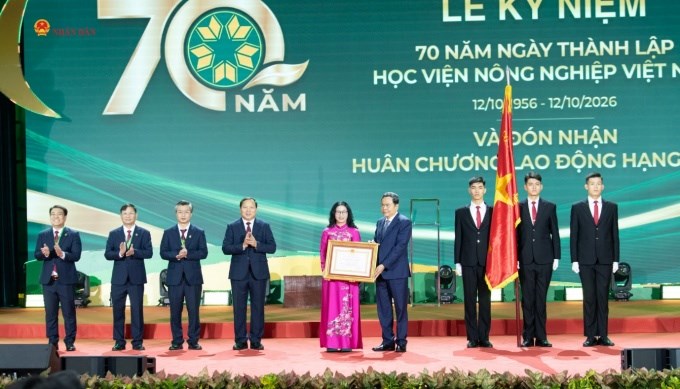
National Assembly Chairman Tran Thanh Man presents the First-Class Labor Order to VNUA.
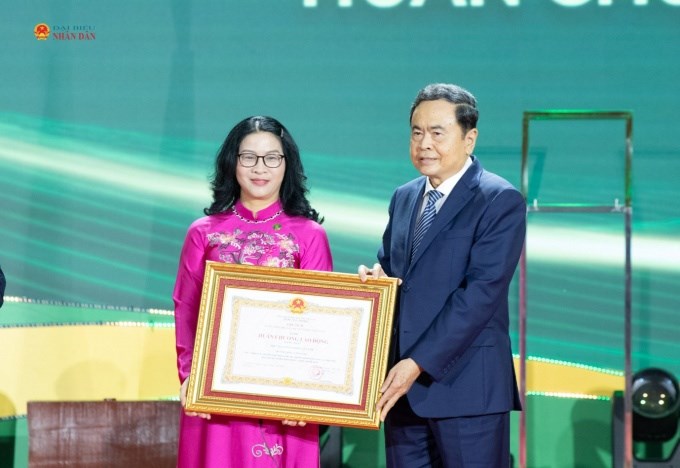
National Assembly Chairman Tran Thanh Man presents the First-Class Labor Order to VNUA.
The National Assembly Chairman called on VNUA to translate these major policy directions into concrete action plans, tangible scientific outputs, and practical value for the country.
Looking ahead, he urged VNUA to focus on effectively carrying out five key tasks.
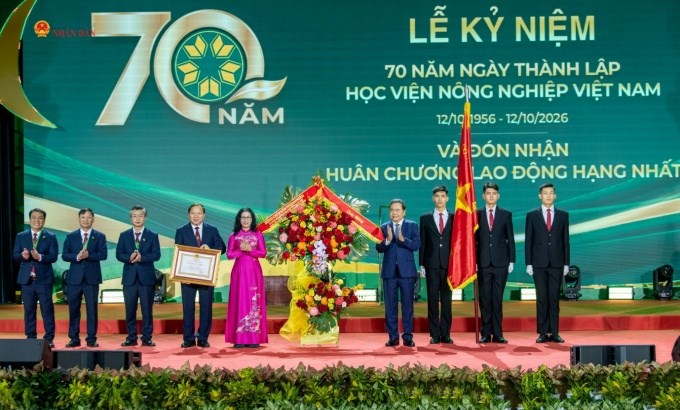
National Assembly Chairman Tran Thanh Man presents the First-Class Labor Order to VNUA.
First, VNUA must undertake a major reform of its training and professional development programs to cultivate “global citizens” for a modern Vietnamese agricultural sector.
“We must shift decisively from providing training based on what VNUA offers to developing programs that meet the needs of society, businesses, and the country’s development. Every graduate must possess a solid knowledge base, strong practical skills, innovative thinking, digital competencies, the ability to integrate internationally, and, above all, a strong desire to contribute to society.
VNUA should become a destination for young people passionate about agriculture, technology, and entrepreneurship, where they can learn, conduct research, and grow,” the National Assembly Chairman suggested.
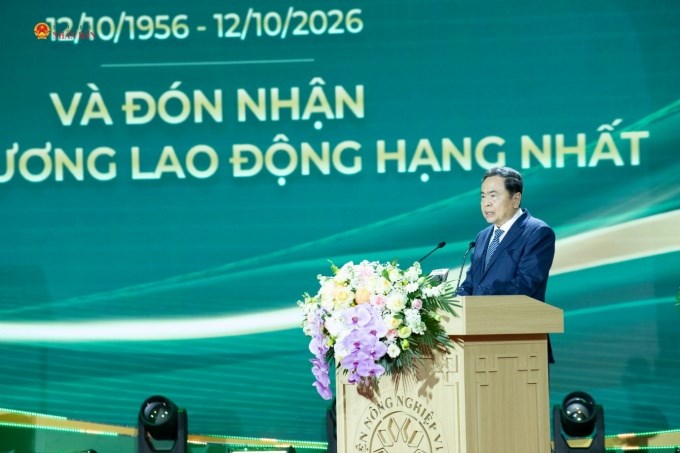
National Assembly Chairman Tran Thanh Man delivers a speech at the anniversary ceremony.
Second, science and technology, innovation, digital transformation, and artificial intelligence must become core drivers of development. VNUA must be bold in exploring emerging fields that are essential to the country's development and attracting growing global interest.
The National Assembly Chairman expressed his expectation that VNUA would develop research achievements, products, and technologies capable of generating tangible economic value. The university should must help reduce costs, maximize benefits, increase farmers' incomes, and ensure Vietnamese agricultural products capable of competing effectively in global markets. These, he emphasized, were important measures of the impact of science and technology.
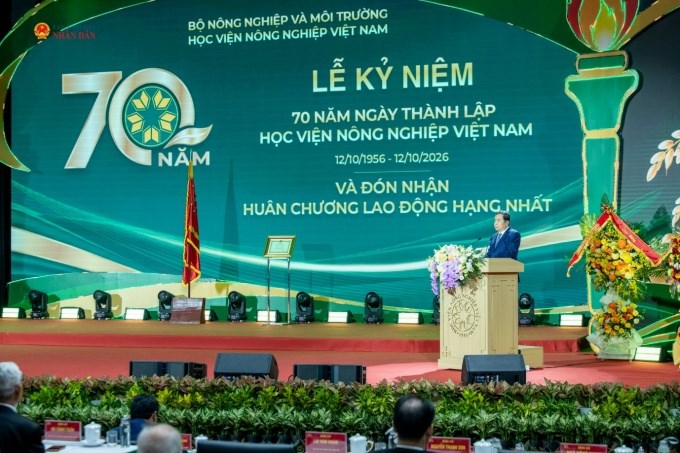
National Assembly Chairman Tran Thanh Man delivers a speech at the anniversary ceremony.
Third, VNUA must serve as a bridge connecting the Government, the universities, scientists, businesses, and farmers. It must act as a hub linking knowledge and technology with practical agricultural production, while expanding its activities beyond lecture halls and laboratories.
According to the National Assembly Chairman, “Knowledge must be brought from lecture halls to the fields; technology must move from laboratories into production; research findings must be translated into business applications; and the benefits of scientific advances must reach farmers. At the same time, challenges arising from actual production must be brought back to lecture halls and laboratories for research and solutions.”
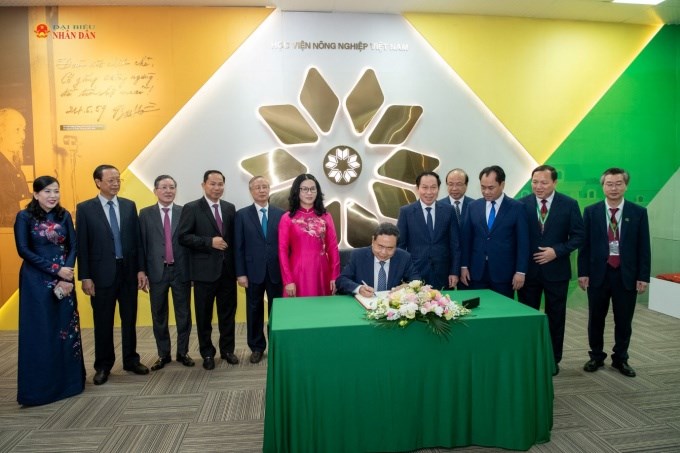
National Assembly Chairman Tran Thanh Man signs VNUA’s Golden Book of Tradition.
Fourth, VNUA should proactively participate in the formulation and critical review of policies on agriculture, farmers, and rural development. With its large community of scientists, long-standing research tradition, and extensive practical experience, VNUA is well positioned to make greater contributions to policy advisory work. The National Assembly Chairman called on VNUA to strengthen this role, emphasizing that research should not be conducted merely to produce academic publications, but to address major national challenges.
At the same time, the university should actively expand its partnerships and engage more deeply in international education and research networks. It should attract international scientists to work, conduct research, and teach at VNUA; enable Vietnamese students to gain international exposure while bringing the world’s most advanced knowledge to Vietnam; and promote Vietnamese agricultural science and technology products, as well as Vietnamese agricultural brands, in global markets.
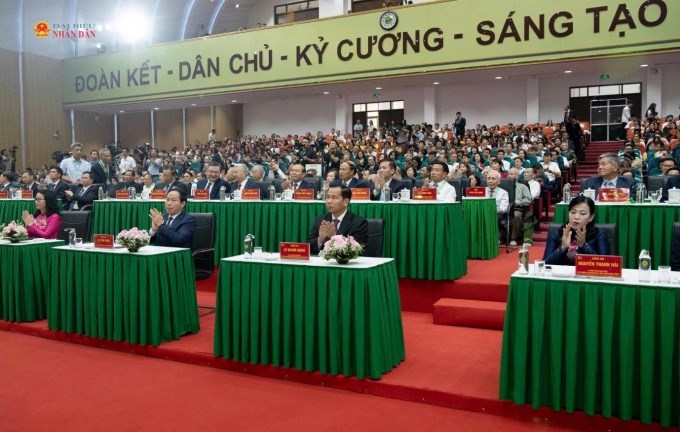
Delegates attend the anniversary ceremony.
Fifth, VNUA should accelerate digital transformation and develop a modern university governance model. Digital transformation must reshape the way the university is governed, education is delivered, research is conducted, and students are supported. This requires greater application of artificial intelligence, the development of a smart learning environment, and continued efforts to streamline the organizational structure, establish appropriate delegation of authority and decentralization, strengthen accountability, and ensure transparent, efficient, professional, and modern governance.
The university should also foster an environment in which scientists are empowered to innovate, contribute their expertise, and receive recognition and rewards commensurate with their contributions. Particular attention must be given to training the next generation of young scientists. By 2045, VNUA should strive to rank among the top 100 universities in Asia.
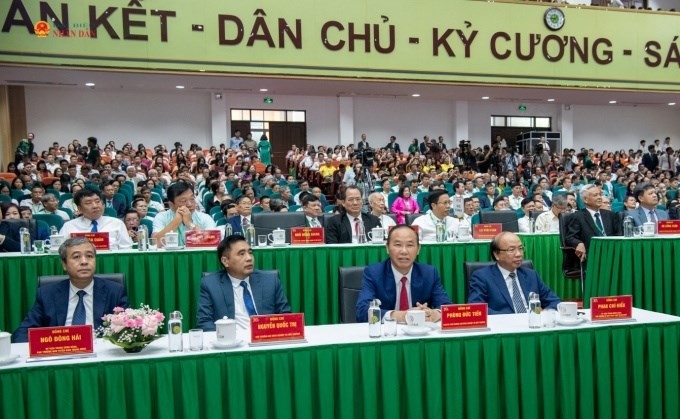
Delegates attend the anniversary ceremony.
Proud of Our Past, Responsible for Our Future
Looking back on VNUA’s 70-year journey, the National Assembly Chairman remarked that the university had every reason to be proud of its past and, with that pride, to embrace an even greater responsibility for the future.
Addressing the university’s younger generations, he encouraged students to study diligently, pursue excellence, devote themselves to research, dare to innovate, and pursue entrepreneurship with bold dreams and ambitions. He urged them to be ready to venture into disadvantaged and challenging areas, expressing his hope that VNUA would continue to nurture outstanding scientists, leading agricultural entrepreneurs, capable managers, and generations of young people driven by the ambition to bring Vietnamese agriculture to the world stage.
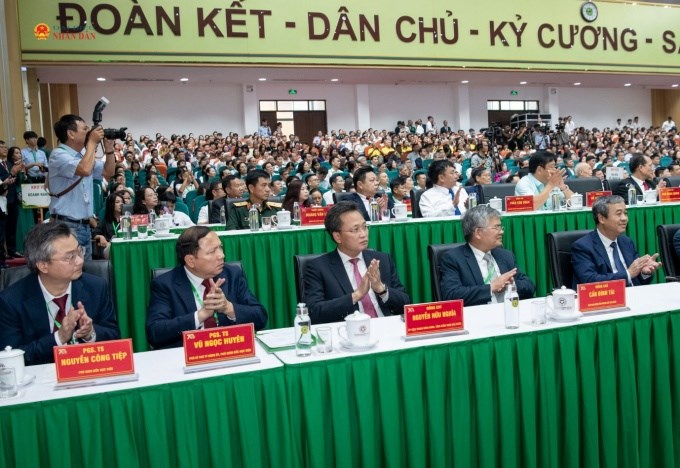
Delegates attend the anniversary ceremony.
The National Assembly Chairman expressed his confidence that, building on its proud traditions, a renewed vision, fresh aspirations, and the renewed dynamism of its dedicated staff, lecturers, and scientists, as well as tens of thousands of alumni working across the country and a dynamic, creative generation of students, VNUA would continue to unite, innovate, foster creativity, integrate internationally, and grow. With the continued attention and support of the Party and the State, VNUA would live up to the trust placed in it by the Party, the State, and the people, making active contributions to the cause of building a prosperous, strong, civilized, and happy Vietnam.
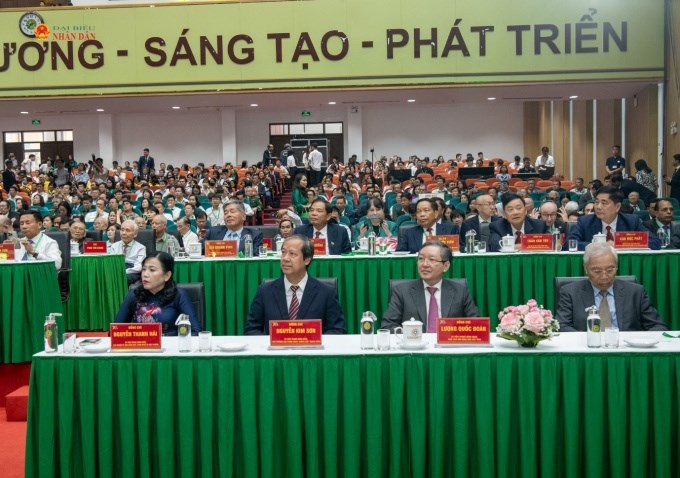
Delegates attend the anniversary ceremony.
Putting Knowledge to Work for the Nation, Agriculture, Farmers, and Rural Communities
Earlier, in her commemorative address, Prof.Dr. Nguyen Thi Lan, Secretary of the Party Committee and VNUA’s President, recalled that on October 12, 1956, the University of Agriculture and Forestry, the predecessor of today’s VNUA, was established. From its humble beginnings, with modest lecture halls, laboratories, and practical training facilities, the university's founding generations worked tirelessly to build the institution through their intellect, dedication, and unwavering faith in the power of knowledge.
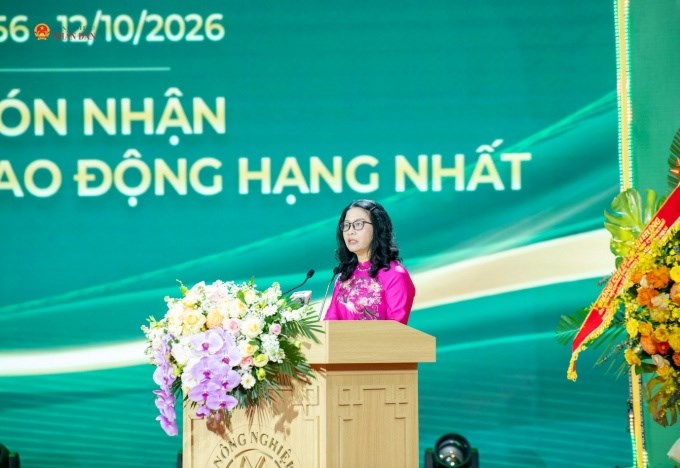
Prof. Dr. Nguyen Thi Lan, VNUA’s President, delivers her speech.
Through the years of war and the subsequent periods of peace, reform, and international integration, VNUA had remained closely connected to the development of Vietnam’s agriculture and rural communities, upholding the mission entrusted to it from its very founding: to educate and develop human resources, advance scientific research, and put knowledge to work for the nation, agriculture, farmers, and rural communities.
In response to the demands of developing a modern, green, and sustainable agricultural sector driven by technological self-reliance, VNUA had identified three key priorities for the years ahead.
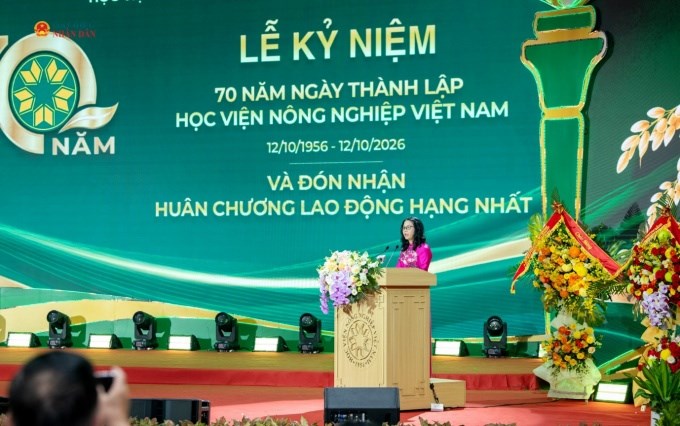
Prof. Dr. Nguyen Thi Lan, VNUA’s President, delivers her speech.
First, reform education and training to equip students with solid professional expertise, creative thinking, technological competence, foreign-language proficiency, and a strong sense of commitment to society, enabling them to address real-world challenges and adapt to a rapidly changing world.
Second, intensify research and technology transfer, focusing on areas in which VNUA has established strengths and that are vital to the country’s development. The aim is to translate knowledge into practical products and solutions that benefit businesses, farmers, and communities.
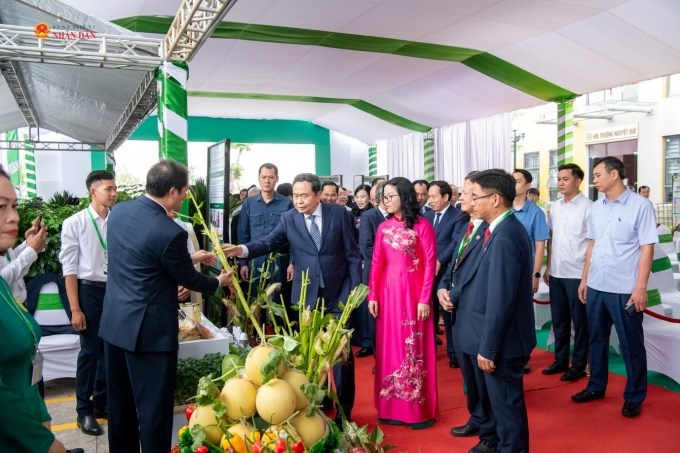
National Assembly Chairman Tran Thanh Man visits exhibition booths at the anniversary ceremony.
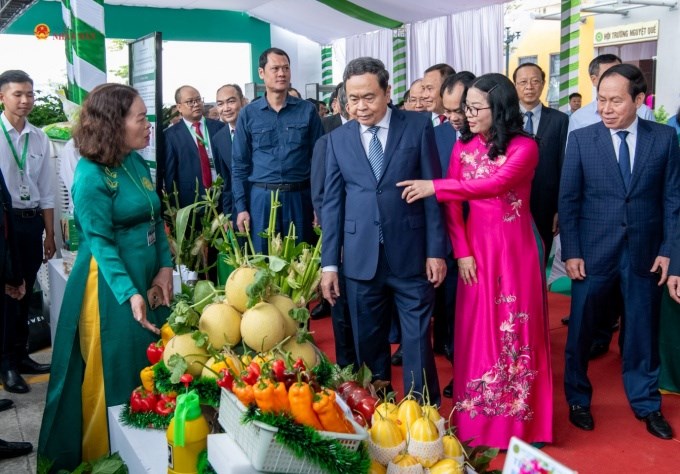
National Assembly Chairman Tran Thanh Man visits exhibition booths at the anniversary ceremony.
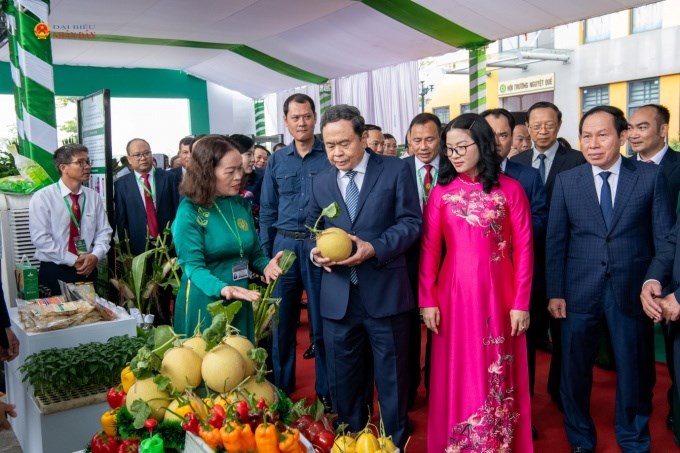
National Assembly Chairman Tran Thanh Man visits exhibition booths at the anniversary ceremony.
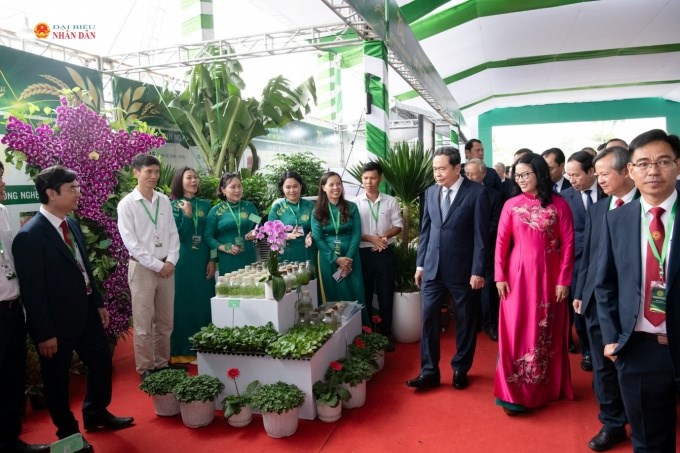
National Assembly Chairman Tran Thanh Man visits exhibition booths at the anniversary ceremony.
Third, modernize governance and strengthen collaboration to create an environment in which talented individuals can realize their full potential and scientists can devote themselves to their work with confidence. VNUA will also deepen its engagement with local authorities, businesses, and international partners.
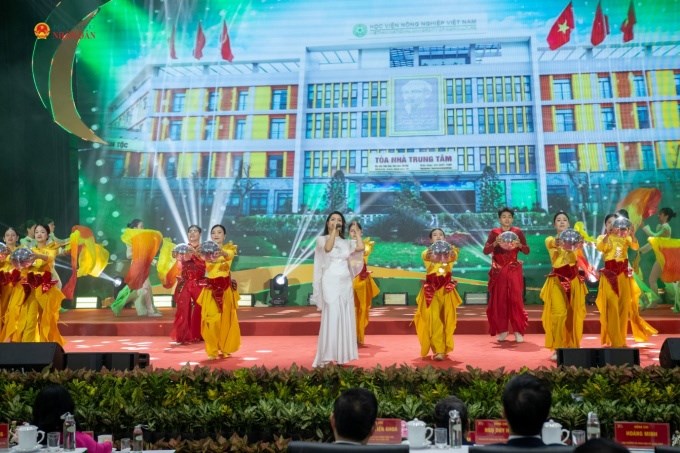
A performance at the anniversary ceremony.
“These are essential steps toward transforming VNUA into a reputable research university in the region, advancing along a path defined by smart development, sustainability, innovation, and humanism. We understand that this ambition must be realized through the responsibility of every member of the university and demonstrated through the quality of our education and training, the value of our scientific research, and our tangible contributions to the country,” affirmed Prof. Dr. Nguyen Thi Lan.