On 27 May 2026, at the National Institute for Food Control, the Vietnam Food Safety Science and Technology Association (VINAFOSA), in collaboration with the National Institute for Food Control, the School of Chemistry and Life Sciences, Hanoi University of Science and Technology, the Faculty of Food Science and Technology, Vietnam National University of Agriculture (VNUA), Ba Dinh Food Technology Joint Stock Company, and Trademark and Products Magazine, organized a workshop on Applying Digital Transformation to Food Safety Risk Management: From Research to Production and Business Practice.
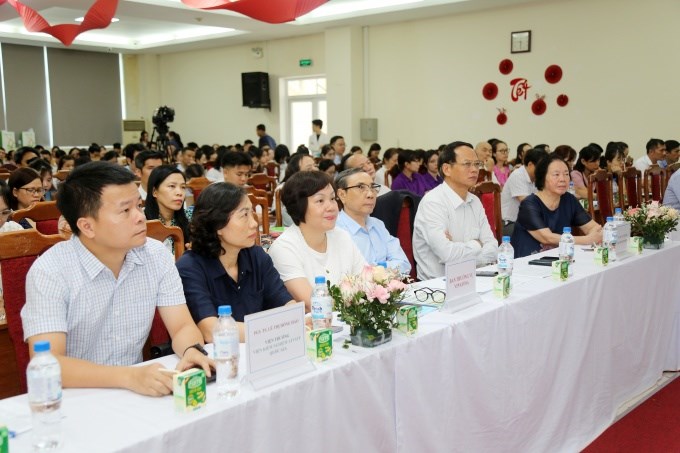
Overview of the workshop
The workshop brought together representatives from management agencies, professional associations, research institutes, universities, food production and trading enterprises, and experts in the field of food safety. It provided an open forum for discussion on a timely and practical question: how digital transformation can be applied effectively to identify, control, and manage food safety risks.
As food supply chains continue to expand, products pass through many stages and involve many actors before reaching consumers. Food safety assurance therefore needs to be viewed as a continuous management process. Control measures should not be concentrated only at the final stage, but should begin from primary production and continue through processing, storage, distribution, product recall, and the handling of unsafe products when incidents occur. In particular, primary production should be understood in its full scope, covering crop production, livestock production, and aquaculture, as these are the stages that directly shape the quality and safety of food raw materials.
From this reality, digital transformation offers important opportunities to make food safety management more proactive, transparent, and effective. Digital databases, electronic records, traceability systems, warning systems, data analytics, IoT, AI, and Blockchain can support monitoring, risk assessment, supplier management, batch control, and information sharing among regulatory authorities, businesses, and consumers.
The presentations at the workshop approached digital transformation in food safety risk management from different perspectives. Topics included risk management across the supply chain; food safety risk management and quality management of natural products in the digital and AI era; the application of modern testing technologies and digital data in risk assessment; the use of IoT, AI, and Blockchain in managing product safety and quality; and business experiences in applying digital technologies to food safety risk management.
As one of the co-organizing units, the Research Group on Microorganisms and Food Safety, Faculty of Food Science and Technology, VNUA, contributed a presentation on the control of input factors in agricultural production as an important foundation for food safety risk management. The presentation emphasized that food safety must begin at the source: soil, water, plant varieties, animal breeds, animal feed, aquaculture feed, fertilizers, pesticides, veterinary drugs, chemicals, products used for aquaculture environment treatment, cultivation, livestock and aquaculture conditions, harvesting, slaughtering, preliminary processing, and initial storage.
This approach highlights that safe and consistently high-quality food products require good control of the factors that shape the product from production areas and primary production facilities. When information on cultivation areas, farms, ponds, livestock facilities, input materials, production practices, harvesting time, product lots, and storage conditions is fully recorded in digital form, traceability and risk management become more practical and effective. This also provides a basis for enterprises to build consumer trust and better meet the increasingly demanding requirements of the market.
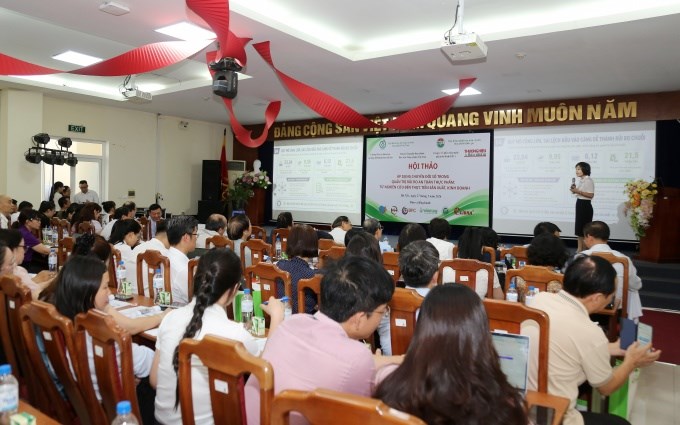
Speakers presenting at the workshop
The panel discussion took place in an open and constructive atmosphere, with practical exchanges on the advantages and difficulties of implementing digital transformation in food safety. Alongside the potential of technology, participants also discussed existing challenges, including investment costs, data infrastructure, system interoperability, digital human resources, and the applicability of digital solutions to small enterprises, cooperatives, farms, and small-scale producers.
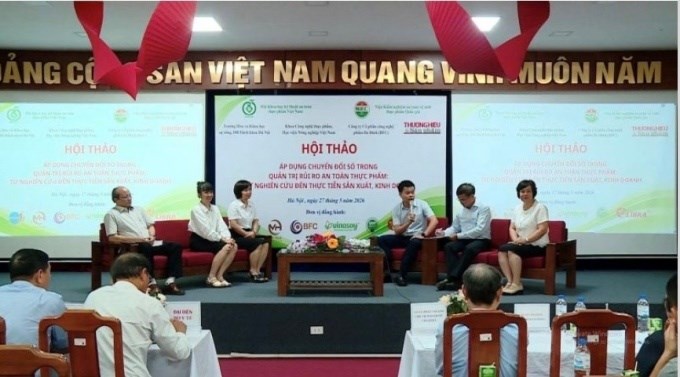
Panel Discussion
A shared view emerging from the discussion was that digital transformation in food safety should start with concrete steps that fit real conditions. These may include standardizing procedures, digitizing records, managing suppliers, recording batch-based data, applying traceability, gradually building warning systems, and connecting data across the chain. When being implemented in the right way, digital transformation is not only a management tool, but also a way to strengthen responsibility, transparency, and trust in food production and business.
The workshop was a meaningful activity connecting managers, scientists, training institutions, enterprises, and professional organizations in discussing food safety from a new perspective. Through its role as a co-organizer, the Faculty of Food Science and Technology, VNUA, continus to affirm its orientation of linking education and research with production practice, management needs, and social demand.
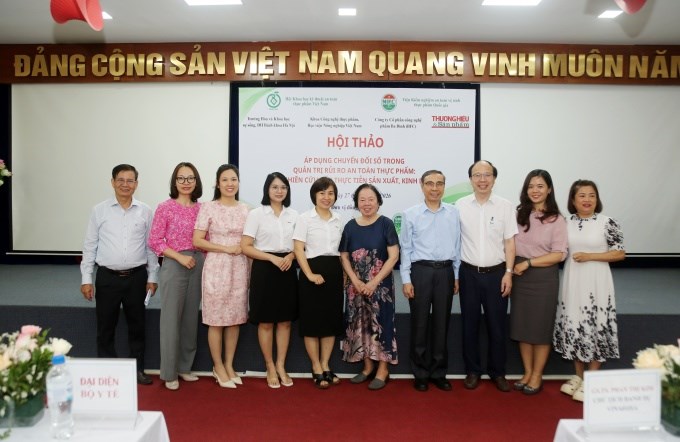
The Research Group with representatives of the Organizing Committee
The workshop also suggested several important directions for future education and research, especially the need to strengthen interdisciplinary approaches that connect food technology, quality management, food safety, digital data, and supply chain management. These directions provide a basis for the Faculty of Food Science and Technology, VNUA to further develop research, cooperation, and technology transfer activities in food safety, contributing to safer, more transparent, and more sustainable agricultural and food supply chains.
Research Group on Microorganisms and Food Safety
Faculty of Food Science and Technology, VNUA