Lecturers from Vietnam National University of Agriculture (VNUA) participated in the Erasmus+ KA171 teaching mobility program at the University of Agricultural Sciences and Veterinary Medicine Cluj-Napoca (USAMV Cluj-Napoca), Romania, thereby expanding cooperation in food science and technology and animal sciences.
Amid the internationalization of higher education, strengthening lecturer mobility, connecting research, and expanding international cooperation networks are among the important strategic orientations of VNUA. Within the ICM KA171-2023 project under the Erasmus+ program, lecturers from VNUA participated in teaching mobility activities at USAMV Cluj-Napoca, Romania, thereby contributing to the promotion of academic cooperation between the two institutions in the field of food science and technology.
Erasmus+ is a European Union program designed to support cooperation in education, training, youth and sport. In higher education, academic mobility activities under Key Action 1 enable students, lecturers and university staff to study, teach, receive training or take part in professional exchanges at partner institutions abroad. For lecturers, the Erasmus+ KA171 program is not only an opportunity to teach in an international environment, but also a forum for sharing professional experience, updating training methods, developing research networks and promoting long-term cooperation initiatives among higher education institutions.
USAMV Cluj-Napoca in Romania is one of the country’s reputable education and research institutions in agriculture, food science and technology, animal husbandry, veterinary medicine and life sciences. The university has a history dating back to 1869, originating from the Cluj-Mănăştur Institute of Agronomy, and later developed into a modern university specializing in agriculture and veterinary medicine. At present, USAMV Cluj-Napoca has major faculties, including the Faculty of Agriculture; the Faculty of Horticulture and Business in Rural Development; the Faculty of Animal Science and Biotechnologies; the Faculty of Veterinary Medicine; the Faculty of Food Science and Technology; and the Faculty of Forestry and Cadastre. The Faculty of Food Science and Technology trains human resources in food engineering, food quality control and food science. The Faculty of Animal Science and Biotechnologies is equipped with practical facilities, laboratories and practice-based training activities serving research, teaching and animal health care.
During their working period at USAMV Cluj-Napoca, the VNUA lecturer delegation, representing the fields of food science and technology and honeybee science, carried out a wide range of practical academic and professional activities. First, the delegation delivered lectures and engaged in professional exchanges with lecturers and students of the Faculty of Food Science and Technology at USAMV Cluj-Napoca on topical and highly applicable issues in food science and technology, food safety and agricultural product quality, including:
1. Upcycling agricultural by-products for fruit preservation: New trends and insights from Vietnam (Assoc. Prof. Dr. Nguyen Thi Bich Thuy, Faculty of Food Science and Technology)
2. Food safety governance: International risk analysis models, and Vietnam’s strategic approach (Dr. Phan Thi Phuong Thao, Faculty of Food Science and Technology)
3. Honey quality: composition, standards and authenticity (Assoc. Prof. Dr. Pham Hong Thai, Research Center for Tropical Bees and Beekeeping)
The exchanges not only introduced research outcomes from Vietnam, but also opened opportunities for learning new approaches in training and research in food science and technology and honeybees in Europe.
In addition to teaching activities, the delegation visited laboratories and pilot sites for bakery, meat, dairy, beer and wine processing under the Faculty of Food Science and Technology. This provided VNUA lecturers with an opportunity to learn about the system of equipment, laboratory organization procedures, research methods, the operation of practice-based training models, and orientations for developing research on sustainable food, deep processing, quality control and value addition for agricultural products.
The delegation also visited USAMV Cluj-Napoca’s honeybee science laboratory system, including laboratories for research on bee diseases and bee breeding, as well as the university’s experimental apiary applying Industry 4.0 technologies. This activity helped broaden interdisciplinary perspectives across crop production, animal husbandry, veterinary medicine and food processing technology, particularly on topics related to bee colony health, bee products, food safety, biodiversity and the role of bees in pollination within agricultural ecosystems.
The teaching mobility program under the Erasmus+ KA171 project brought many practical values to lecturers and students of the two universities. It contributed not only to enhancing the professional capacity and international integration capacity of VNUA lecturers, but the direct opportunity to teach and conduct academic exchanges in a European university environment also helped lecturers update pedagogical methods, course design approaches, methods for organizing practical training, and strengthen their English teaching capacity in the context of curriculum internationalization.
The program also expanded the space for research cooperation between VNUA and USAMV Cluj-Napoca. Topics such as utilizing agricultural by-products to extract bioactive compounds, developing new natural coating materials for food preservation, ensuring food safety in international trade, studying the quality of bee products, and developing sustainable agricultural systems all represented areas with long-term cooperation potential. The exchange program laid the foundation for subsequent activities, such as co-organizing international seminars, exchanging lecturers and students, and developing international project proposals in food science and technology, sustainable agriculture, veterinary medicine and food supply chain safety. In particular, the connection between VNUA’s Faculty of Food Science and Technology, Faculty of Agronomy, and Research center for tropical bees and beekeeping and the professional units of USAMV Cluj-Napoca demonstrated the potential for forming interdisciplinary research groups that combined agricultural production, food processing, agricultural by-products, animal health and the protection of agricultural ecosystems.
The teaching mobility activity at USAMV Cluj-Napoca is a concrete step in VNUA’s strategy to strengthen international cooperation. Going beyond a single academic mission, the Erasmus+ KA171 program has created a foundation for both sides to develop deeper cooperation in training, research, knowledge transfer and international integration.
In the coming period, VNUA might continue to promote cooperation with USAMV Cluj-Napoca by developing two-way exchange programs, establishing joint research groups, connecting postgraduate students and jointly participating in international research networks. This will definitely serve as an important basis for improving training quality, strengthening research capacity and affirming VNUA’s role in the global network of agricultural higher education.
Some photos
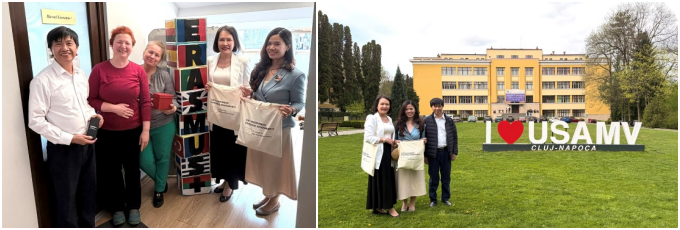
The delegation of lecturers from VNUA at USAMV Cluj-Napoca, Romania
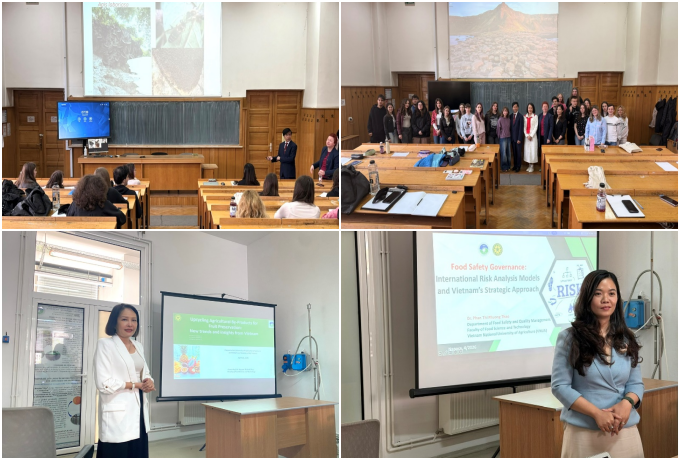
Teaching activities at the Faculty of Food Technology, USAMV Cluj-Napoca
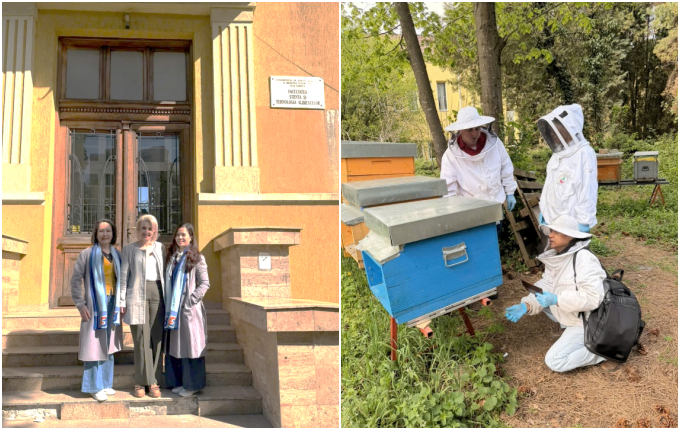
Visit the Faculty of Food Technology and the beekeeping experimental farm of USAMV Cluj-Napoca
Faculty of Food Science and Technology